

“There’s a huge responsibility in trying to make good decisions for the land,” says Alison Reintjes. “But it's also an opportunity to lead by example.”
Taking care of the land is a tremendous task, whether a property is ten acres or 10,000. In western Montana, wildfire, weeds, forest and soil health, drought, wildlife-livestock interactions, and fencing are just some of the issues landowners contend with. Yet the work landowners put into their land is what supports a wider landscape that is healthier, more productive, and more resilient.
On conservation lands, like Five Valleys’ nearly 200 conservation easement properties, stewardship comes with extra considerations and benefits. Projects must align with the terms of the property’s conservation agreement and benefit the property long-term. However, conservation lands are a great investment: the land is guaranteed to remain open, ensuring that the time and money that goes into a new fence or reseeding project won’t be bulldozed in the future.
This past summer, Alison, her husband, Brandon, and their family completed a wildfire readiness forest thinning project on their conservation easement property in Pattee Canyon, near Missoula. The original easement grantors, Ron and Nancy Erickson, had thinned the forest. But, a few decades later, it had grown dense again which left it, and the Reintjes’ home and neighborhood, vulnerable to wildfire.
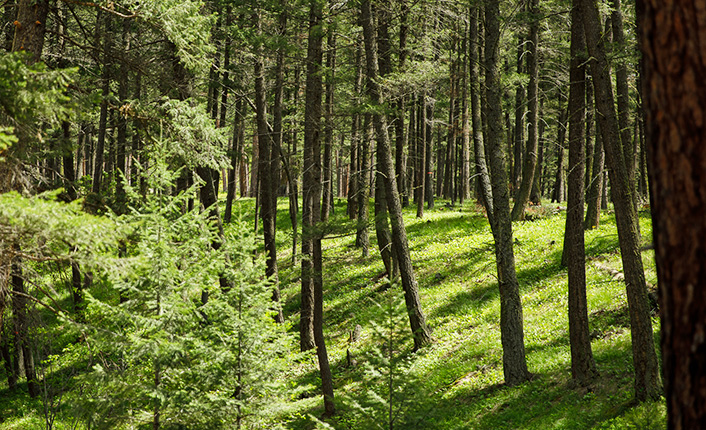
“I feel a tremendous amount of pressure to get things done,” says Alison, who serves as the Executive Director of Grow Safe: Non-Toxic Missoula. “A fire can come through any year. You want the forest to be able to burn in the safest way possible when and if that happens.”
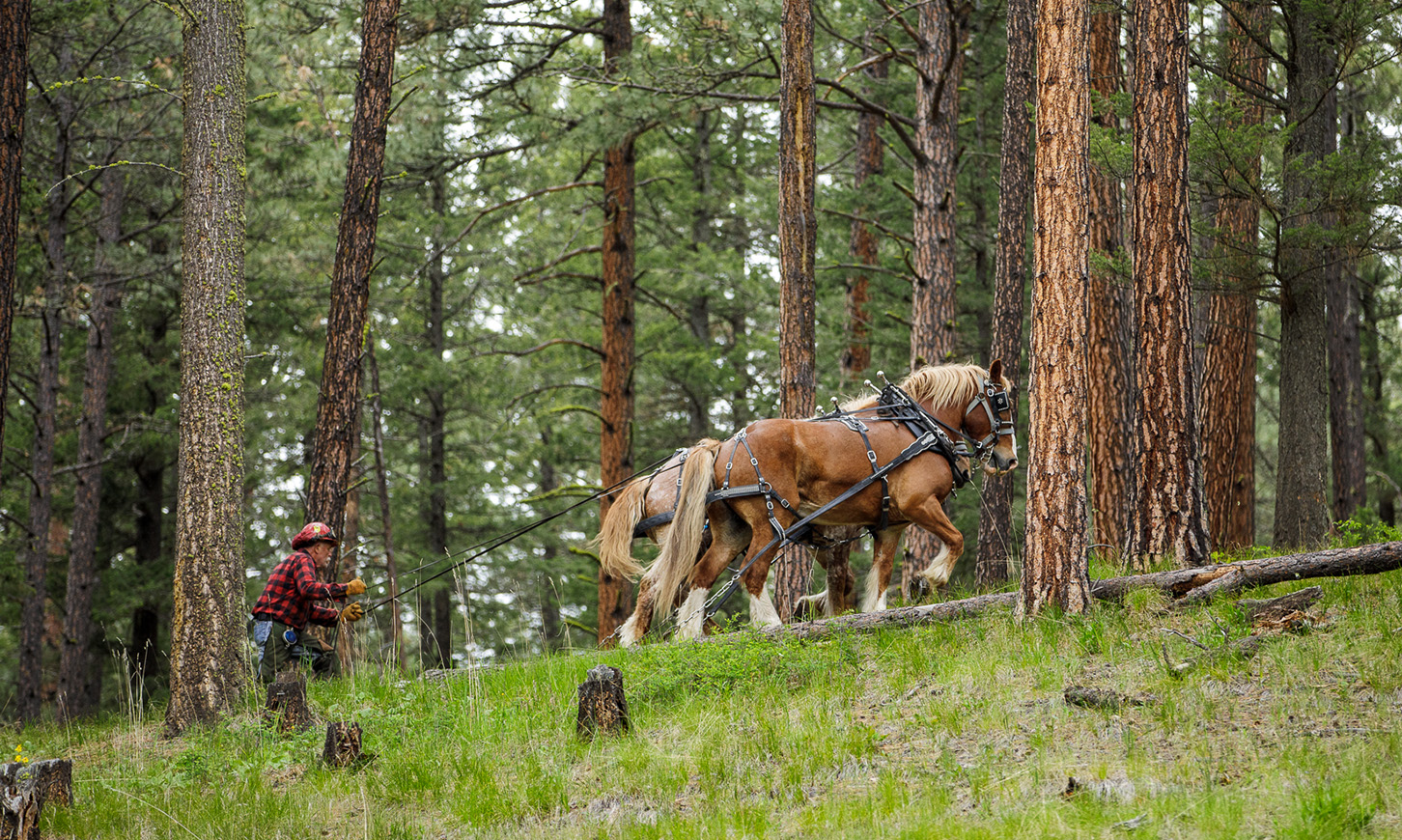
The Reintjes’s worked with Five Valleys and interviewed several foresters to ensure their project incorporated the latest fire science, was in line with their conservation easement, and fit their goals. After careful consideration they turned to a unique option: horse logging.
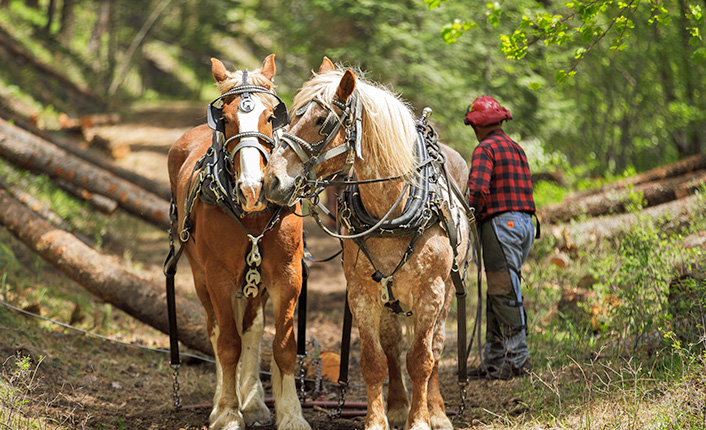
“Horse logging is considered light on the land,” says Kenn McCarty. “We can be quite surgical.”
For Kenn and his business partner, David Sturman, logging with draft horses is a meeting of both careers and interests. Each man has a background in wildfire and forestry and his own band of draft horses.
“Fire is going to return. There's no stopping it; there is only delaying it,” says Kenn. “When you do these jobs, you're not preventing fire from coming through. You're changing the nature of the fire when it does come through.”
With the support of a federal cost-sharing program through Missoula County, the Reintjes hired Kenn and David to thin a portion of their property. They created space between bigger, healthier trees and a defensible space around buildings. The project sent smaller fir trees to a mill and left the non-merchantable pines as habitat and future soil nutrients. After thinning was complete, the Reintjes and the teenage crew with Missoula County Youth in Restoration built slash piles that will later be burned.
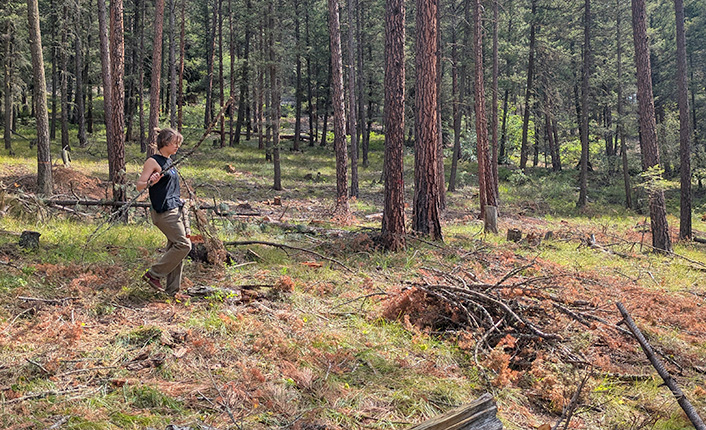
“You have an obligation to do something,” says Brandon, who is also the Executive Director of the Missoula Art Museum. “You have to figure out how to do it with the resources that you have, or the help that's being offered. Because doing nothing means creating a disaster for the neighbors or yourselves.”
In addition to their thinning project, the Reintjes have deployed biocontrol insects that target noxious weeds and regularly hand-pull weeds. They also removed a quarter-mile of old fencing with the help of friends and Five Valleys’ Hands on the Land volunteers. Now, wildlife can move through the property more easily.
“It’s a total privilege to be put into this position, to have to do that care,” says Brandon. “It does take a lot of work, but it's not always our work. It's Five Valleys’ work, or it's Missoula County's work. I appreciate that there's so much support.”
--
“If you don't take care of your ground, your ground's not going to take care of you,” says rancher Sandy Graveley.
Seventy miles east, the Graveley family is engaged in an entirely different sort of land management. Here in the Upper Clark Fork near Garrison, the Graveleys manage their two conservation easement properties for rangeland health, livestock grazing, and wildlife.
“There's a picture of us on the cover of [the Fall 2019 edition of Landmarks], and you take that same picture and you look at what it looks like now—it’s only six years ago, and you can't believe how high and how thick the timber has gotten. It's just amazing how it's taken over,” says Sandy.
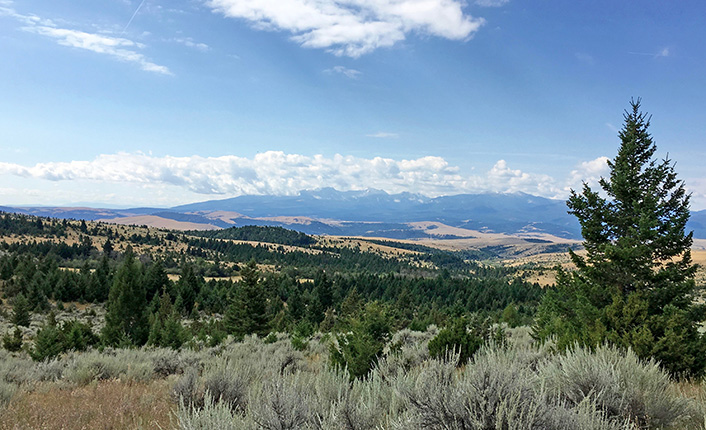
The Graveley family has been ranching in the Upper Clark Fork for over 125 years. In 2019, they worked with Five Valleys to place a conservation easement on a portion of their ranch. They used the proceeds from the sale of that conservation easement to buy and conserve a neighboring parcel. In the years since, however, trees have started encroaching onto the grasslands that the Graveleys, and wildlife, depend on.
As land use and weather patterns change, conifer encroachment has become an issue across the West. Tree species like Rocky Mountain juniper elbow out understory plants and worsen drought as they suck up more water than the surrounding grasses. This reduces forage for elk, deer, cows, and other grazing animals.
“Where we're doing the work, it used to be three-quarters grass. And, before we started this project, it was probably three-quarters timber. You can't ride through it chasing cows,” says Sandy. “If you don't clear out a lot of that timber, the elk can't move through it either."
Sandy says that when he and his brother, Shane, were kids, the elk were seen in smaller groups, hiding their numbers in smaller, but healthier timber stands. Now, hemmed in by trees, the elk gather by the hundreds and eat down more of the grass that remains in the open.
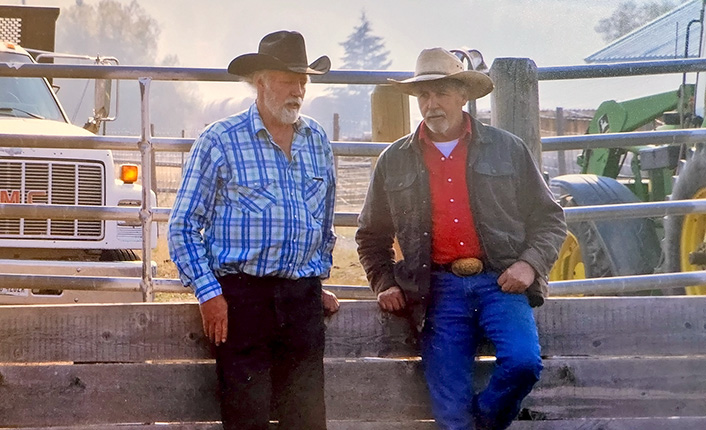
The Graveleys have been chipping away at the dense stands, but they estimate that the project may take up to six years. That’s in addition to releasing biocontrol insects on noxious weeds, improving fencing, and the other daily tasks that keep a ranch running. But, thanks to the family’s philosophy and the property’s conservation easement, their work will reap benefits for decades to come.
“We're not into subdividing. Ranchers can't be into subdividing. If you don't want an overrun of elk on your ground, you have to allow hunting. Besides, God put them on the earth for people to use,” says Sandy. “That's one thing I really liked about working with Five Valleys. Really, [Five Valleys’] ideas were pretty much our ideas. We never saw it as really giving up a whole lot, and we could benefit.”
Five Valleys’ role in supporting stewardship of private conservation lands is a privilege and a responsibility that we don’t take lightly. Rather, it's a task we look forward to alongside our partnering landowners who inspire the way.
Header photo by Athena Photography
