

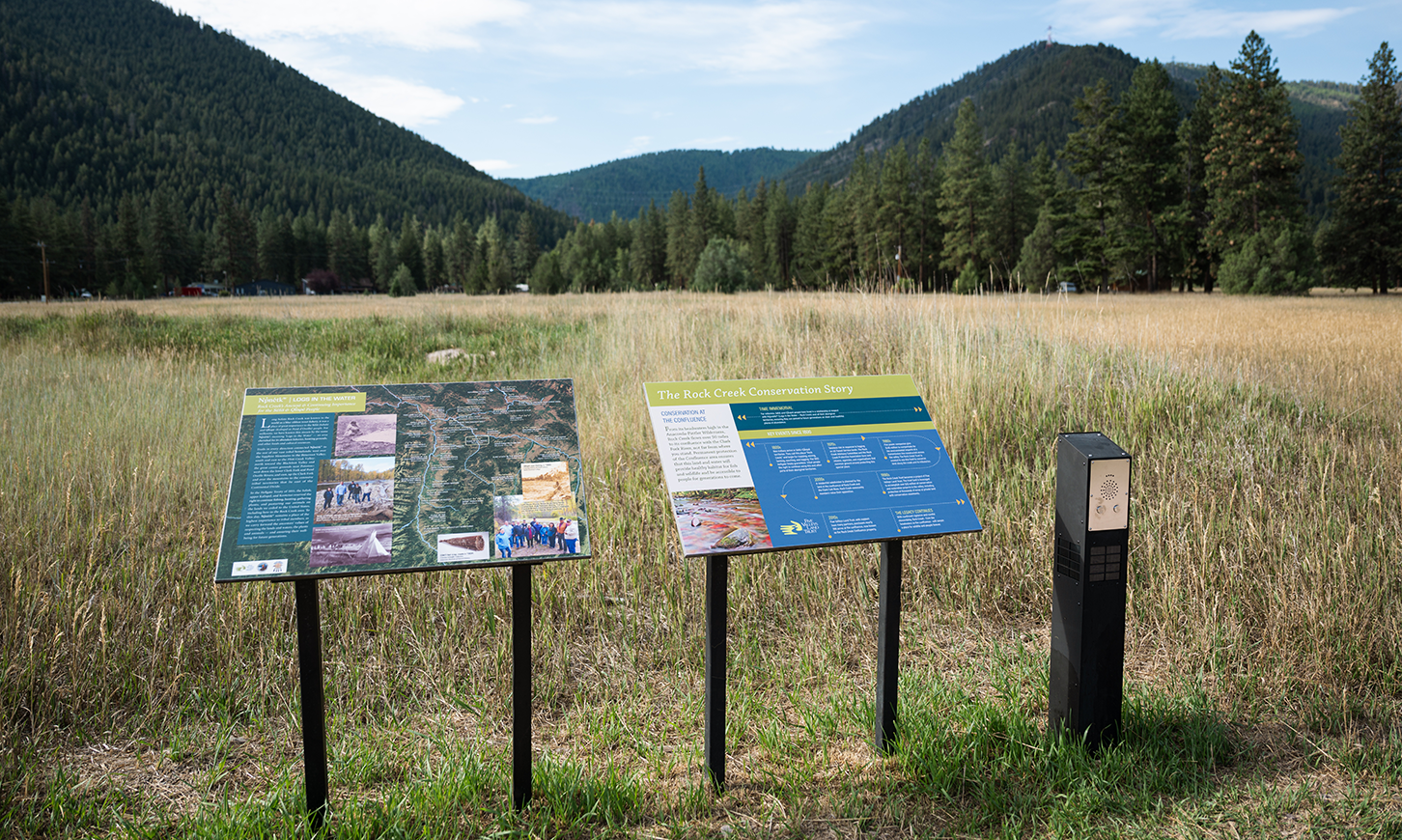
Next time you hit the trails at the Rock Creek Confluence, you may notice some sleek looking-black “posts” lining the Gateway Trail. What are they, you ask? Solar audio posts!
In addition to the new universal access trails that have been built at the Confluence, Five Valleys and our partners have also been developing audio interpretation—something unique in our region. Rarer yet, the posts feature the Confluence’s story in both English and Salish.
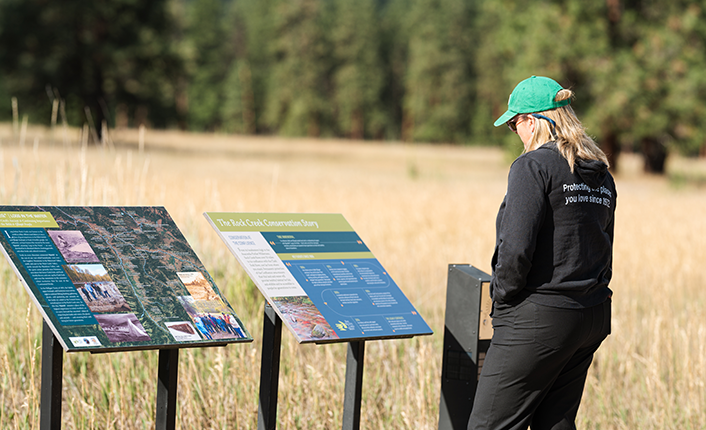
In 2020, Five Valleys installed the interpretive signs at the Confluence. This suite of signs—nine on the west side and three on the east side of the property—included a Braille welcome sign as well as Salish placenames signs about Np̓nétk͏ʷ or "Logs in the Water,” the placename for the Confluence area, created in partnership with the Confederated Salish and Kootenai Tribes’ Séliš-Ql̓ispé Culture Committee.
Yet, as our partnerships with the Culture Committee, Summit Independent Living, and the Missoula Blind and Low Vision Support Group grew, our perspective grew, too: What if we had audio interpretation to better tell the story to even more visitors?
Today, five audio posts beckon visitors to push their buttons. Nestled alongside their sister signs, the posts describe the signs and their surroundings for those who have vision impairments, or who simply want an immersive experience. The posts also share the Salish’s story of the Confluence, including creation stories and history as well as wildlife and location names in Salish.
The recordings were made possible through a collaboration of partnerships: the Séliš-Ql̓ispé Culture Committee, who generously shared their knowledge and language, and especially Shirley Trahan, who recorded the Salish portions; Hudson Therriault with HJT Descriptions, who translated the signs to audio and recorded the English portions; the Missoula Blind and Low Vision Support Group and Summit Independent Living, and especially Colleen Faulkner, who provided invaluable feedback; and funding from the Historical Museum at Fort Missoula's Preserving Missoula County's History Grant Program, Missoula Fish, Wildlife and Parks’ Region 2, and generous community donors, including readers like you.
Happy exploring—and listening!
Header photo by Anastasia Wilde
